Car Warning Light: Meaning, Causes & What You Should Do (Complete Guide 2026)
- acbautoparts6
- Mar 25
- 3 min read
Seeing a Car Warning Light on your dashboard can be confusing, especially if you don’t know what it means. Many drivers face this situation daily and often ignore the warning, thinking it’s not serious. However, these lights are designed to alert you before a small issue becomes a major problem.
Your car is equipped with advanced systems that constantly monitor its performance. Whenever something goes wrong, a Car Warning Light appears to inform you. In this blog, you will understand what these lights mean, why they appear, and what steps you should take to handle them properly.
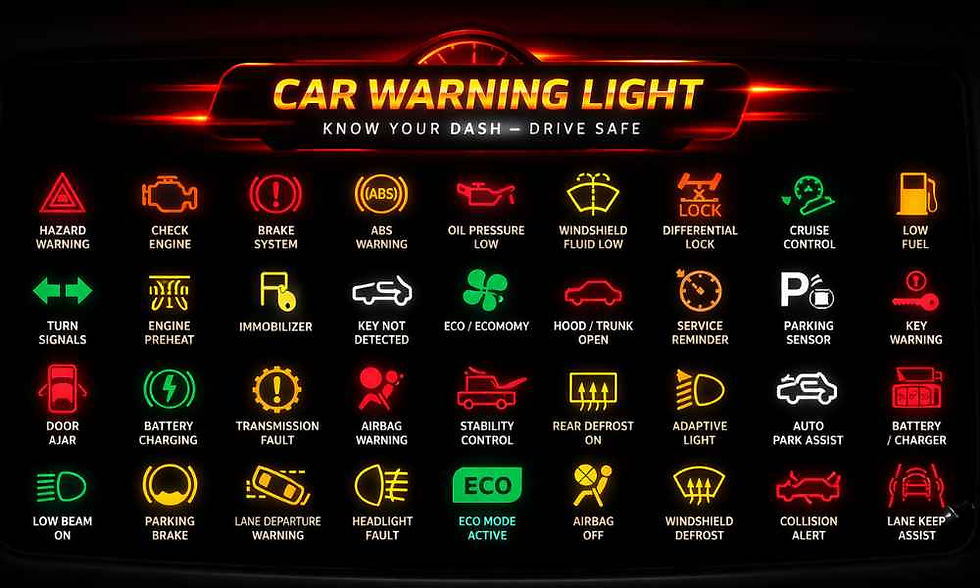
What Does a Car Warning Light Indicate?
A Car Warning Light is a signal generated by your vehicle’s onboard system. It is connected to various sensors that track engine performance, braking, temperature, battery health, and more.
When any system detects an abnormal condition, it activates a warning light. This helps you take action early and avoid bigger mechanical failures. These lights are not just indicators—they are safety alerts that should be taken seriously.
Understanding Warning Light Colors
The color of a Car Warning Light plays a very important role in understanding the urgency of the problem.
Red Lights – Immediate Action Required
Red warning lights indicate serious faults. These are usually related to critical systems like brakes, engine temperature, or oil pressure.
If you see a red light, you should stop the car safely and inspect the issue before continuing.
Yellow/Orange Lights – Attention Needed
These lights indicate that something is not working properly but is not immediately dangerous.
You can continue driving for a short time, but you should plan to get the issue checked soon.
Green/Blue Lights – Normal Operation
These lights are simply informational and indicate that a feature is active, such as headlights or indicators.
Important Car Warning Lights You Should Know
Below are some of the most common Car Warning Light indicators explained simply:
Check Engine Light
This light appears when there is an issue with the engine or emission system. It can be caused by anything from a minor sensor issue to a major engine fault.
Oil Warning Light
This indicates low oil pressure or insufficient oil levels. It is one of the most critical warnings and should not be ignored.
Battery Light
This shows that the battery is not charging properly. It may be due to a faulty alternator or weak battery.
Temperature Warning Light
This light indicates that the engine is overheating. Continuing to drive in this condition can cause serious damage.
Brake System Light
This warning indicates a problem with the braking system, which directly affects safety.
Why Do Car Warning Lights Appear?
A Car Warning Light can appear for several reasons, including:
Sensor malfunction
Low fluid levels (oil, coolant, brake fluid)
Electrical issues
Engine or transmission problems
Poor maintenance
These warnings are early signals that something needs attention.
What Should You Do When a Warning Light Comes On?
If a Car Warning Light appears, follow a simple approach:
Check the color of the light
Understand the symbol
Refer to your vehicle manual
Avoid aggressive driving
Get professional inspection if needed
Taking the right action at the right time can prevent costly repairs.
Common Mistakes Drivers Make
Many drivers ignore warning lights or delay repairs. Some assume that if the car is running fine, the issue is not serious.
Other mistakes include:
Ignoring repeated warnings
Using temporary fixes
Not checking fluids regularly
These habits can reduce your car’s life and increase repair costs.
How Warning Lights Help You Save Money
A Car Warning Light is actually a money-saving feature. It alerts you early so you can fix small issues before they become expensive.
For example:
Fixing low oil early is cheap
Ignoring it can damage the engine
Regular attention to warning lights helps maintain your vehicle efficiently.
Tips to Avoid Frequent Warning Lights
To reduce the chances of warning lights appearing:
Service your car regularly
Check oil and coolant levels
Maintain battery condition
Use quality fuel
Avoid rough driving habits
Preventive care always reduces future problems.
Conclusion
A Car Warning Light is not something to ignore—it is your vehicle’s way of protecting you and itself. Understanding these warning signals helps you make better decisions, avoid breakdowns, and maintain your car’s performance over time.
By staying aware and taking timely action, you can ensure a safer and smoother driving experience. Always rely on proper maintenance and quality components, and when needed, choose a trusted Genuine Auto Parts Supplier to keep your vehicle running reliably for years.


Comments